


The whole brief fit in one email. A product description, a launch date, and one image of the sword on a white background. That was the entire brand asset library on day one.
For most agencies that is a blocked project. No hero photography means a shoot. A shoot means a stylist, a location, a lighting rig, a courier picking up the unit, a courier returning the unit, two weeks of scheduling friction. For a small D2C launch that is the whole budget gone before a single page is built.
We took the white background still as the only fixed input and built everything else around it. The blade in that photo is the truth of the product. Every other frame in this case study was generated to live next to it without breaking the illusion that they came from the same shoot.
Act 01
Building a world from one image
The first job was reading the source image like a brief. Blade silhouette, hilt geometry, the exact shade of the LED, the way the metal catches light. Those properties became the lock. Every generated frame after that had to honour them, or it was rejected.
Then we wrote the world. Cyberpunk alley for the hero, wet asphalt and neon. Sun bleached desert road for the wide. Convention floor for the cosplay frame. Each environment got its own reference library: photography we trusted, lighting languages we wanted, palette clamps to keep the look consistent.
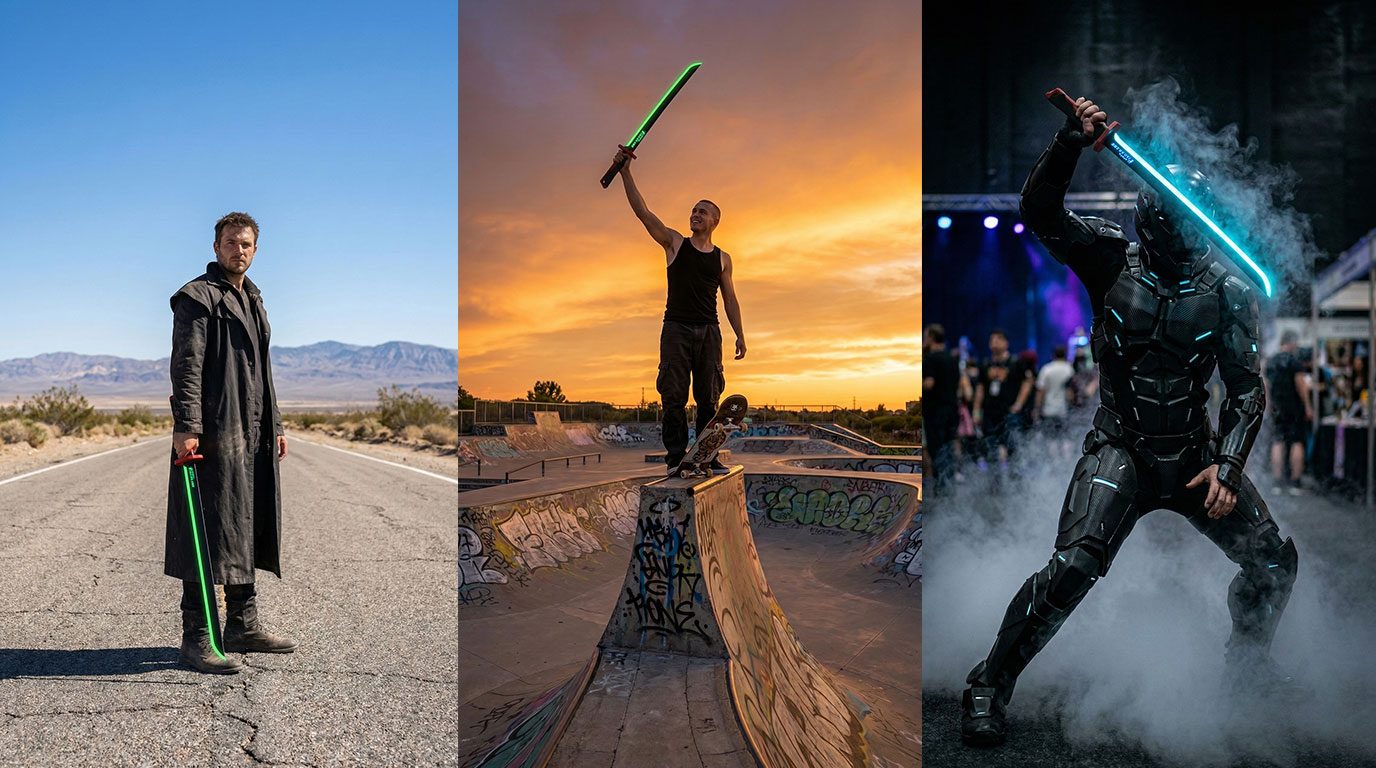
We worked the way a DP works dailies. Generate widely, throw most of it out, keep the frames where the blade reads correctly and the environment feels like a place rather than a render. The keepers got light grading, the same colour pipeline a live action edit would get.
Act 02
A hero film with no film shoot
The product page needed motion. Short, looping, the kind of clip that lives in a header and rewards a second viewing. The traditional answer is a film day. Stunt rig, gimbal, smoke machines, a colourist on call. It is good work and it takes weeks.
We made the same kind of film, frame first, in the same generated pipeline as the stills. Short clips, strong silhouettes against wet streets, the blade as the only saturated colour in shot. The cut sits under fifteen seconds and is built to loop forever without fatigue.
The same master file then got recut for the social rail. Vertical for TikTok and Reels, square for the carousel, a wider version for the email. One generation, four placements, no extra production. That ratio is a big part of why this approach pays back: every frame you direct can ship in three or four formats without going back to set.
Act 03
Product details and lifestyle, generated
A product page also needs the close ups. The metal grain on the hilt. The full RGB sweep across the blade. The product on a stand, lit cleanly, ready to be cropped into a comparison block. These are the frames a studio table top photographer would shoot in a day. We generated them in an afternoon.
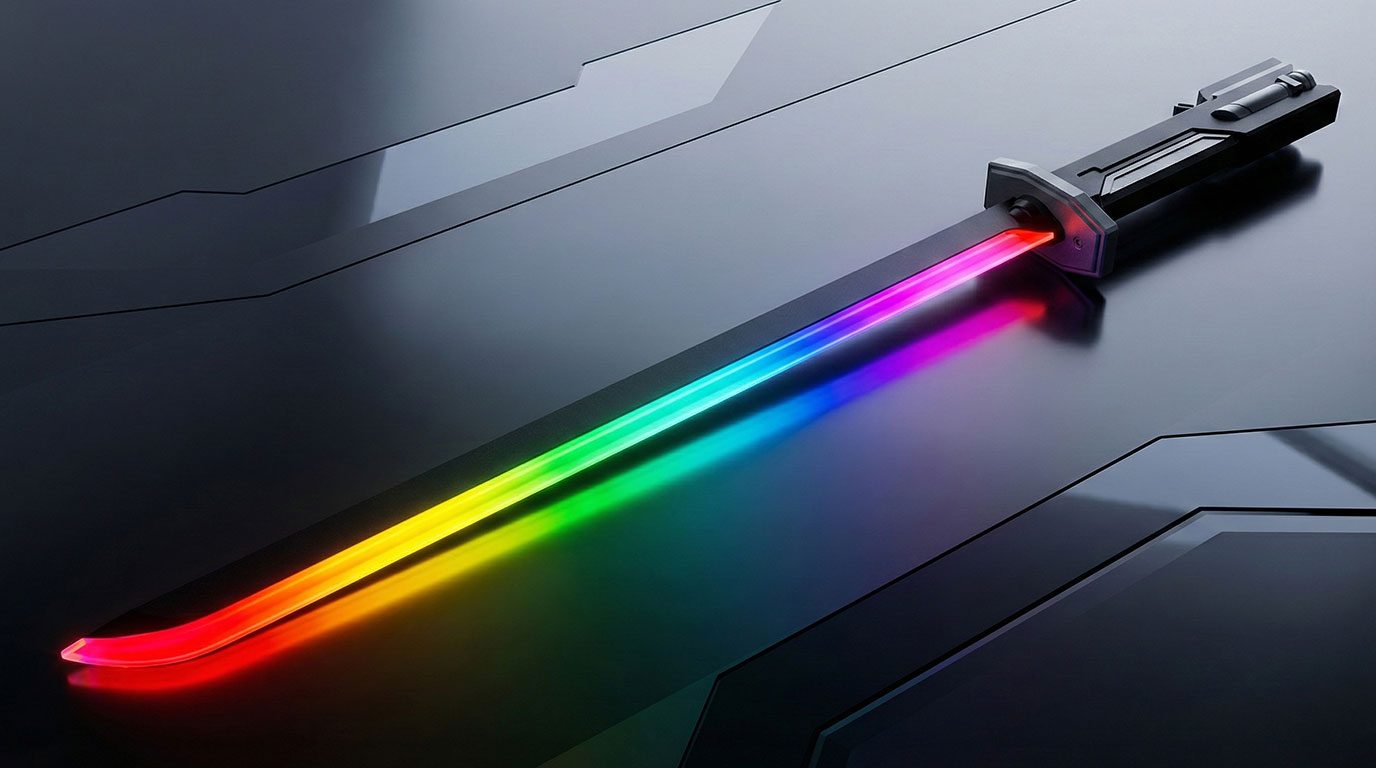
Then the lifestyle frames. Someone holding the unit in a setting that suggests use. We were careful here. AI lifestyle photography can drift into an uncanny valley fast, especially around hands. So we treated each scene like a casting call: many takes, hard rejection on anything that did not look real, only the best frames survived.
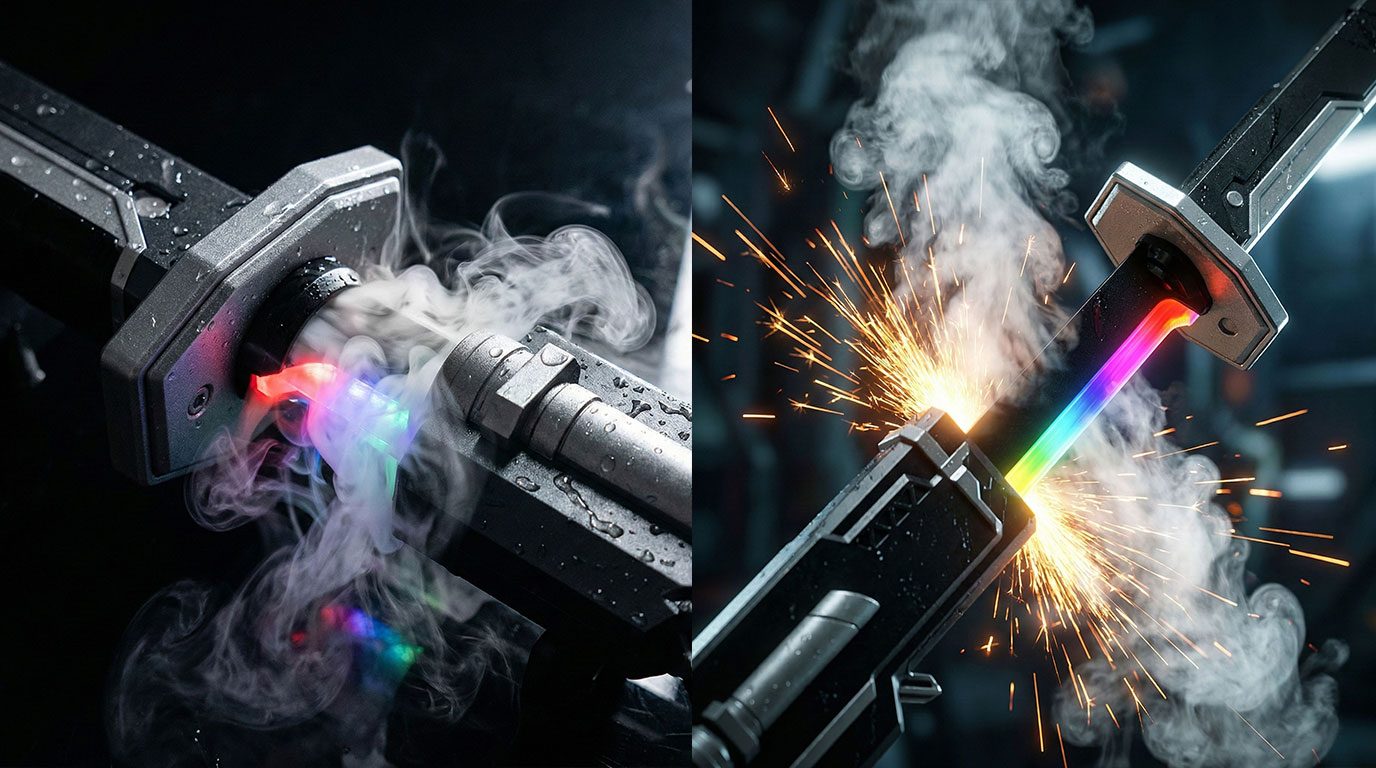
None of these frames required the unit. The client kept the prototype on their desk the whole time. We worked from the white background photo and the product spec, and the imagery was reviewed daily over a shared link. That feedback loop ran in hours, not in shipping windows.
Act 04
The real win was speed
The visuals look the part. That is half the story. The half that mattered to the client was timing.
- Brief landed Monday morning. Reference library locked Monday afternoon. First batch of hero frames in review by end of day.
- Lifestyle and detail frames signed off mid week. The hero film cut and approved on the same Friday.
- Storefront populated, copy in voice, checkout wired to iDEAL, by the following Tuesday. Live and taking orders inside two weeks of the brief.
For comparison, a traditional production track for the same outputs would have been at least six weeks. A photographer for product details. A second photographer for lifestyle. A third unit for the hero film. Studio days, courier days, edit days. None of it overlapping cleanly. All of it depending on the client shipping the prototype between locations.
By the numbers
- 14 days from brief to live storefront, taking orders.
- 0 studio days. 0 couriers. The prototype never left the client's desk.
- 1 generated master per shot, 4 deliverable formats out the door (hero, vertical, square, email).
- ~6 weeks of traditional production track collapsed into the same fortnight.
And because nothing was tied to a physical shoot, every revision after launch ran on the same rails. Need a new lifestyle scene for an ad set? Generate it against the existing library. Need a holiday cut of the hero film? Same source, new frame trims. The asset pipeline is now a tool the client can keep using.
Where it goes from here
Three concrete next steps queued for Sparkblade, all on the same pipeline.
- A second wave of lifestyle frames keyed to retail moments: convention season, gift season, festival season. Each one a half day of generation, not a half week of pre-production.
- A community gallery fed by buyer photos, curated and folded back into the PDP. The generated baseline is the floor; real owner frames are the ceiling.
- An interactive colour cycler on the product page so the buyer can preview LED modes before they add to cart. Today it is described in copy. Next, it animates.
The point of the case study is not that AI replaced the photographer. It is that the client showed up with one photo and walked away with a brand world, on a timeline that suited the size of the launch. That is the trade we keep making for D2C clients who do not have studio budgets but still need the work to look studio shot.
